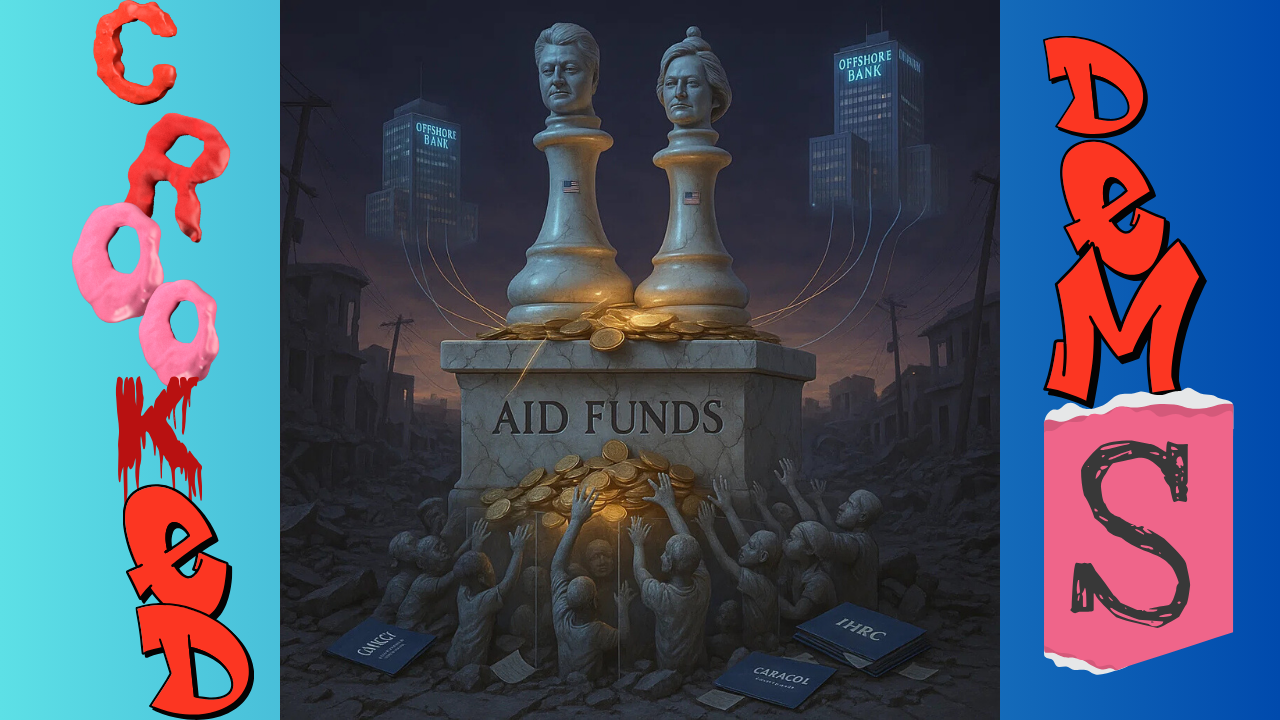
Decades of influence, billions in pledges, but little relief—Haitians say the Clintons’ aid era left more questions than progress. #ClintonControversy #Haiti
The Indelible Imprint of Bill and Hillary Clinton on Haiti: A Legacy of Despair
The story of Haiti’s prolonged struggles cannot be told without mentioning Bill and Hillary Clinton. The couple, who once honeymooned in the Caribbean nation in 1975, would return to play roles that left a legacy many Haitians now regard with contempt and disappointment. Though touted as saviors who would lift the nation out of poverty—especially after the devastating 2010 earthquake—the Clintons’ involvement has, for many, been synonymous with broken promises, opaque dealings, and wasted opportunities.
This article examines the scope and consequence of the Clintons’ presence in Haiti, providing a comprehensive, critical, and SEO-optimized long-form analysis of how two of the most powerful political figures in the U.S. became the face of Haiti’s post-quake stagnation.
A Honeymoon Turned Geopolitical Chessboard
Bill and Hillary Clinton’s connection to Haiti began innocently enough—with a honeymoon in 1975. However, that relationship evolved over the decades into something far more complex and controversial. As political powerhouses, the Clintons wielded influence through U.S. foreign policy, international aid, and the notorious Clinton Foundation.
To many Haitians, their history with the country feels less like a love story and more like an uninvited intrusion that shaped Haiti’s trajectory in destructive ways.
Bill Clinton’s Agricultural Disaster in the 1990s
Long before the earthquake, Bill Clinton’s agricultural policies as President of the United States severely impacted Haiti. In a bid to open markets and promote free trade, Haiti was encouraged—and arguably coerced—into reducing tariffs on imported rice.
The result? Haiti’s once-thriving rice industry collapsed. Cheap, subsidized rice from the U.S. flooded the market, putting local farmers out of business. Haiti, a self-sustaining agricultural nation, became dependent on American food imports. Clinton would later publicly apologize for this decision, acknowledging its detrimental impact. But the damage had already been done.
The 2010 Earthquake: Tragedy and Opportunity
The 2010 Haiti earthquake was a moment of unparalleled devastation, killing over 200,000 people and leaving millions homeless. Global attention zeroed in on the island, and so did billions of dollars in international aid.
Enter the Clintons—Bill as UN Special Envoy to Haiti, and Hillary as U.S. Secretary of State. They were uniquely positioned to direct how that aid was allocated, distributed, and spent.
It was the perfect storm for influence and opportunity. But the outcomes were far from what Haiti needed.
Formation of the IHRC: Power Without Accountability
To coordinate international recovery efforts, the Interim Haiti Recovery Commission (IHRC) was formed, with Bill Clinton as co-chair alongside Haitian Prime Minister Jean-Max Bellerive. The IHRC was created to streamline aid management and maximize recovery impact.
However, what unfolded was a tale of centralized power, lack of transparency, and minimal results.
Over $13.3 billion was pledged by international donors, and of that, billions were supposedly disbursed through the IHRC. But where did the money go?
The Ill-Fated Caracol Industrial Park
Of all the projects to come out of this massive inflow of aid, the Caracol Industrial Park stands as a monument to failure. The park, pitched as a game-changer for Haiti’s economy, cost $300 million and was backed heavily by the Clintons and the U.S. government.
It promised 20,000 jobs, a power plant, and economic revitalization. Instead, it delivered fewer than 10,000 jobs at its peak, displaced local farmers, and benefited foreign corporations more than the local economy.
Sae-A Trading Co., a South Korean textile giant and major employer at Caracol, later donated between $50,000 and $100,000 to the Clinton Foundation, raising serious conflict of interest concerns.
Clinton Foundation: Good Intentions or Global Exploitation?
The Clinton Foundation claims its involvement in Haiti led to tree planting, farmer support, renewable energy projects, and women’s literacy programs. While some of these efforts may have had localized impacts, they pale in comparison to the scale of aid and donations received.
Critics argue the Foundation served more as a hub for influence peddling than effective development. With millions raised in the name of Haitian recovery, measurable outcomes remain elusive, further tarnishing the Foundation’s image in the eyes of Haitians.
Allegations of Political Financing
Though unproven, there have been allegations that funds funneled through Haiti aid mechanisms may have indirectly supported Hillary Clinton’s 2016 presidential campaign. Her evasiveness on the issue only fuels suspicion among those already skeptical of the Clintons’ motives in Haiti.
To many Haitians, these allegations—however unconfirmed—validate a deeply held mistrust: that the Clintons were more concerned with global stature and personal gain than with rebuilding a nation.
The U.S. Government Accountability Office Speaks Up
In a rare critique, the U.S. Government Accountability Office (GAO) acknowledged that the plans initiated by the IHRC under Bill Clinton’s co-chairmanship “did not align with Haitian priorities.”
That statement alone highlights one of the most critical flaws of the Clinton-led efforts: top-down planning devoid of local engagement. Haiti’s own leaders and citizens had little to no say in the rebuilding process.
Dependency, Not Development
Even today, Haiti remains heavily dependent on foreign aid, a situation exacerbated, not alleviated, by the Clintons’ initiatives. The nation imports rice from the U.S., depends on international donors for healthcare, and lacks the infrastructure to recover on its own terms.
The foreign-aid industrial complex, of which the Clintons have been pivotal players, seems to favor short-term results and contractor profits over sustainable, Haitian-led solutions.
Haitian Voices: From Gratitude to Resentment
To outsiders, the Clintons may have appeared as philanthropic figures. But in Port-au-Prince, Cap-Haïtien, and beyond, the sentiment is far less flattering. Haitians often speak of the Clintons with contempt, viewing their legacy as a series of missed opportunities and manipulated narratives.
There’s a feeling of betrayal among locals who believed the post-earthquake attention could lead to meaningful change. Instead, they watched as billions vanished with little to show for it.
Conclusion: Time to Shift the Power Back to Haiti
The saga of Bill and Hillary Clinton’s involvement in Haiti is one of grand promises followed by disillusionment and disrepair. From failed agricultural policies to post-disaster mismanagement, their legacy is permanently etched into Haiti’s modern history—and not in a way that evokes gratitude.
It’s time for a paradigm shift in how Haiti is rebuilt and governed. The focus must now return to empowering local leaders, investing in Haitian-owned businesses, and respecting the country’s sovereignty.
The Clintons came to Haiti with influence and resources unmatched by any other outsiders. But instead of lifting the nation, their tenure is remembered by many Haitians as a period where hope was traded for foreign agendas and unfulfilled dreams.
Let Haiti rebuild itself. Let its people decide their future. And let the imprint of foreign intervention—especially that of the Clintons—fade into history.
About the Author